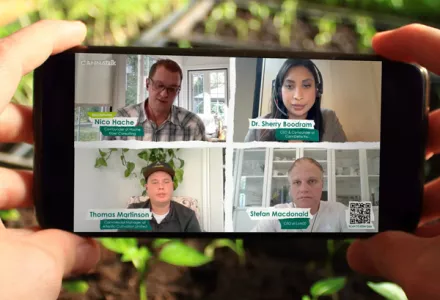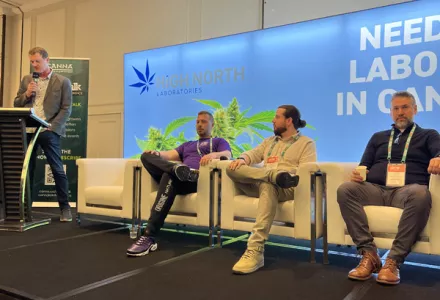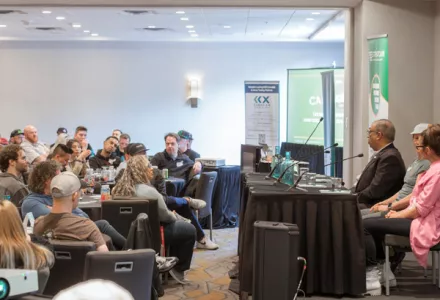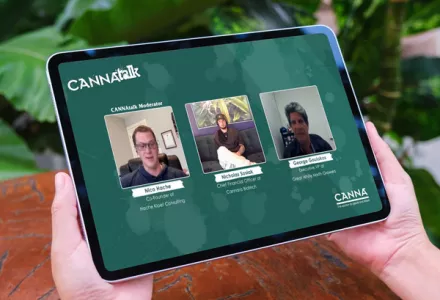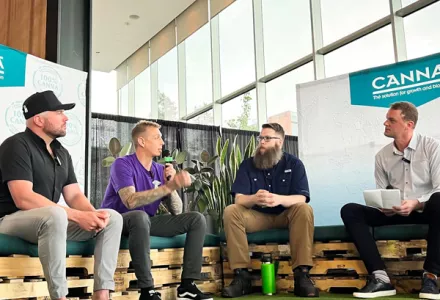
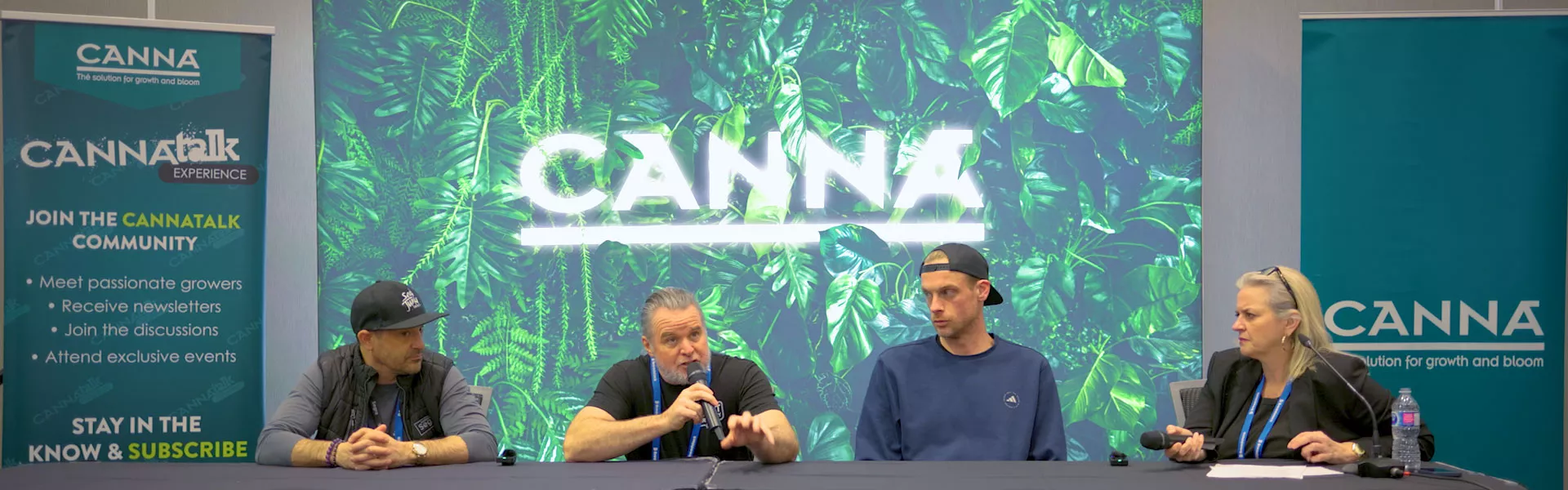
The CANNAtalk discussion: Genetics in Focus Part II, was certainly unique this time as we hosted it in person on stage in the CANNA Breeders Zone at Grow Up in Vancouver to kick off the New Year.
We welcomed back our three initial panelists from Part I to continue the conversation:
- Daniel Joly (Cultivation & genetic consultant)
- Kevin Jodrey (Founder of Wonderland Nursery and Co-Founder of the Ganjier Program) and
- Matthew Don-Carolis (VP of Sales and Business Development, Segra International)
- Moderator Shannon Kloet (Tamerlane Trading)
The focus of Part II was on what truly matters for long-term success in cannabis: genetics. Genetics sit at the foundation of cultivation, product consistency, and consumer experience, and this discussion was intended to move beyond short-term trends toward what will endure.
Watch the video below:
NOTABLE INSIGHTS
The panel began by examining what traits will define the next generation of commercially successful cannabis genetics. While candy flavours, gassy profiles, and purple bag appeal currently dominate the market, the panel emphasized that these signals alone will not define the future. Younger consumers are increasingly approaching cannabis through a wellness lens and are looking for predictable, intentional effects. The discussion highlighted a shift toward effect-driven breeding, where cultivars are selected and developed based on the experiences they deliver, supported by better data linking chemical profiles to outcomes.
They also discussed the importance of preserving genetics that are not immediately commercial. Several panelists noted that some of the most valuable traits in the next two to three years may come from plants that do not fit today’s market trends. Maintaining genetic diversity and learning from these less commercial cultivars allows producers to respond when market preferences evolve. Breeding, therefore, must balance present demand with long-term optionality.
As they turned to convenience formats such as pre-rolls, the panel made it clear that genetics still matter, even when bag appeal is less critical. Quality, consistency, and performance remain essential, and all of these begin with the plant. Regardless of format, cultivars must perform reliably, yield efficiently, and meet consumer expectations at the appropriate price point.
A candid discussion followed around the distinction between personal preference and commercial reality. What a breeder or cultivator personally enjoys does not always translate to what can succeed in a regulated market. Distribution risk, operational costs, and regulatory pressures significantly narrow the range of viable genetics. Even value-priced products must meet baseline quality expectations, as consumers with limited disposable income are often the least able to absorb disappointment.
They then explored the future role of seeds and clones, particularly the growing use of F1 hybrid seeds. While large-scale operators are successfully using F1 seeds to standardize production, the panel agreed that clones will remain essential, especially for smaller or premium producers. Clones enable faster deployment and preserve unique genetics that competitors cannot easily replicate. The future is not a choice between seeds and clones, but a coexistence where each serves a distinct role.
Consistency was another major theme. Even identical genetics can express differently depending on cultivation methods, environment, and process control. While standardized playbooks and improved SOPs are helping reduce variability, cultivation practices remain just as influential as genetics themselves. Understanding and managing this relationship is key to building consumer trust.
Education emerged as one of the most significant gaps in the current system. Budtenders and frontline staff are expected to guide consumers through increasingly complex decisions, yet they are often undertrained and under-resourced. The panel emphasized the need for experiential education that connects retail staff and consumers directly with producers, farms, and cultivation practices. These experiences provide context and understanding that packaging alone cannot deliver.
Technology and information tools, such as QR codes, were also discussed. The consensus was that information alone does not drive engagement. Consumers need incentives, such as rewards or added value, to participate meaningfully. Effective feedback loops must benefit the consumer as much as the producer if they are to generate useful data.
When discussing market intelligence, the panel encouraged looking beyond licensed retail channels. While not endorsing illicit markets, they noted that these channels often reflect true consumer demand more quickly due to fewer constraints. Observing where demand overlaps across markets can help producers distinguish genuine trends from those driven by regulatory convenience.
Genotyping and genetic fingerprinting were highlighted as important tools for restoring trust and reducing consumer confusion. By verifying what a product truly is, producers can help consumers reliably repurchase products that work for them, even across brands or regions. This is particularly important in a market where consumers cannot afford to gamble on inconsistent experiences.
Overall, the conversation reinforced that the future of cannabis will be shaped not by hype alone, but by better genetics, better data, stronger education, and deeper connections between producers, retailers, and consumers.