

From genetics to margins, CANNA’s Masterclasses covered what cultivators need next
For two days at Grow Up Conference & Expo in Toronto, the CANNA Masterclass stage became a hub for one of the industry's most valuable resources: shared knowledge.
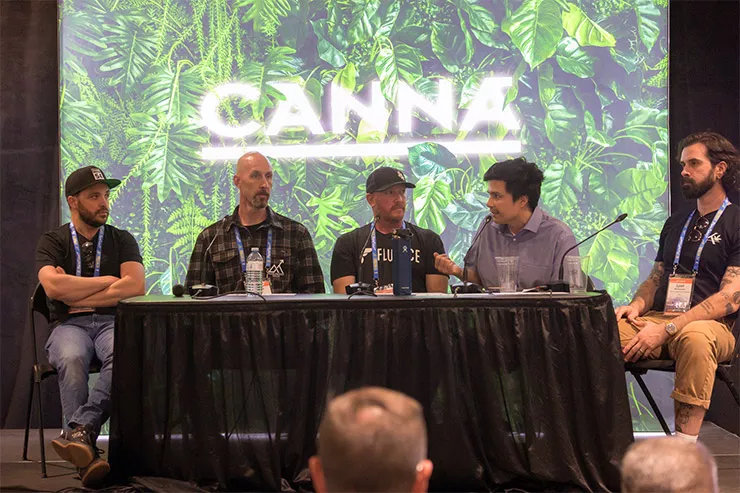
Positioned in CANNA Canada’s dedicated corner, the stage hosted 12 Masterclasses and brought together growers, breeders, and specialists to explore the factors shaping commercial cultivation. From genetics and crop steering to terpene science, sustainability and profitability, sessions proved the industry moves forward with valuable discourse.
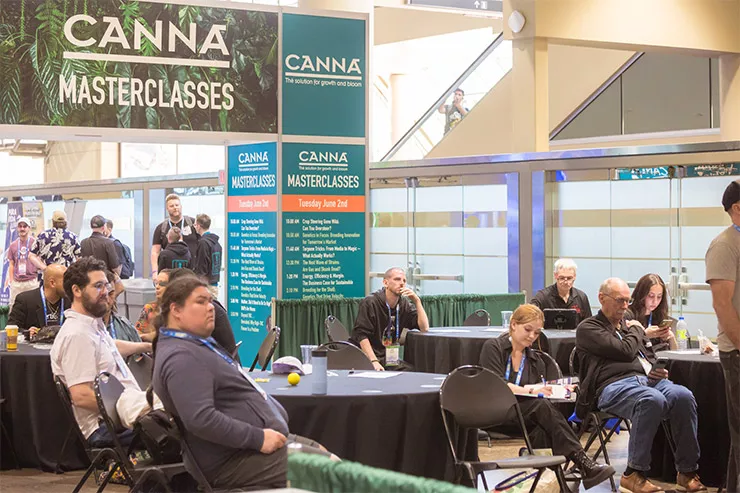
As the cannabis industry matures, success depends on access to reliable information. While regulations, market conditions, and consumer preferences shift, the fundamentals of cultivation remain rooted in learning, experimentation and the exchange of ideas. The Masterclass sessions were designed with that principle in mind.
Below are five takeaways from the 12 panels, which will soon be available in full on CANNA Canada’s YouTube channel, with one panel released every two weeks throughout the summer months.
Watch CANNA Masterclass Playlist Here:
Genetics and Breeding Innovation
Atiyyah Ferouz, CEO of AgCann Consultancy, which specializes in cannabis operations and quality assurance, spoke on the panel discussing the future of cannabis genetics and what cultivators can expect in the short and long term.
As the owner of a tissue culture lab in Thailand, Ferouz says:
“I am seeing an increase in the number of cultivators using our genetic banking services.”
“In the short term, tissue culture is the keystone of genetic preservation and the supply of clean, quality genetics. In the long term, we expect to see a shift to increased reliance on stable seed lines, in line with other commercially cultivated crops.”
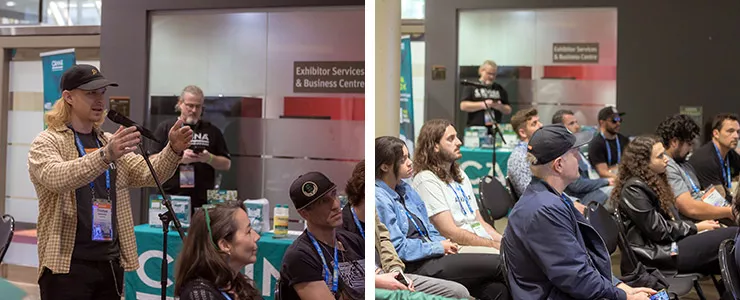
The driving force behind an industry still currently favouring high THC genetics is due to the cannabis industry being consumer-led. “That means that the consumers have a large impact on which genetics are selected for production,” she says.
As the industry evolves and patients and consumers become more informed, global genetic selection trends will shift. “Many of us in the industry are hopeful,” says Ferouz, “that this shift will allow for a large array of chemotypes to be more widely available.”
This conversation about future-proofing genetics set the tone for the rest of the sessions, which kept returning to a common theme about commercial success – marrying plant science with market reality.
Terpenes and Consumer Demand
If genetics determine what growers can produce, terpenes define what consumers notice first.
Rebecca Duff, General Manager at Quebec LP, Green Joy, emphasized terpenes as a way of transferring information from the producer to the consumer. She highlighted how even low potency flower with high terpenes still elicit desired effects.
Panelists agreed – terpenes have caught on among consumers – and chasing those numbers, whether through labs or crop steering, is a viable strategy in response to what retailers are buying.
Chris Crosbie of Atlantic Cannabis calls it the “business of turning over packages and making people happy.” Keeping in mind that producers must always meet consumers where they’re at, says Daniel Cook, CEO of True Terpenes, calling this notion a “long-term commitment.”
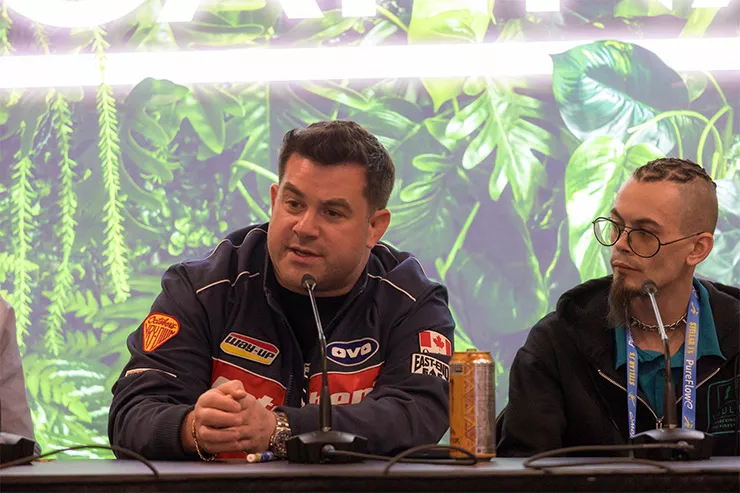
The panel showed mixed opinions insofar as terpene-infused pre-rolls. While old school producers are “dinosaurs at this point,” says Crosbie, the new consumer, familiar with other regulated fruity-flavoured products, has created a demand for flavoured cannabis. Duff stands in her conviction, of “compensating for those things in other ways,” even as far as to say that added botanical terpenes seem “sacrilege.” Yet still she recognizes that, as the market matures, so too are the producers maturing alongside.
Panelists know they’re not selling cannabis to the people in this room and are therefore needing to account for generational discrepancies between operators and the consumers of today.
Cook cautions against operators holding purist ideals because the business of cannabis is all about growing in bigger markets. Regardless of opinion, he says, facts state that the “flavour forward side” is expanding, and it’s largely due to aromas and the human experience.
That market lens came into sharp focus in the next panel, where breeders debated which flavour profiles cover which regions.
Are Gas and Skunk Dead?
From a breeding and genetics point of view, speakers addressed what’s hot and in demand in the broader cannabis market.
“My opinion is that gas and skunk are a geographical game,” says Josh Rutledge, co-founder of Flavour House Genetics. “It’s not in high demand in some places in the world, but in other places, like here, for example, gas will always be the leader.”
“But I would also separate skunk from gas. A classic skunk is very different than a modern gas,” he says, helping to distinguish the dank that we all know and love.
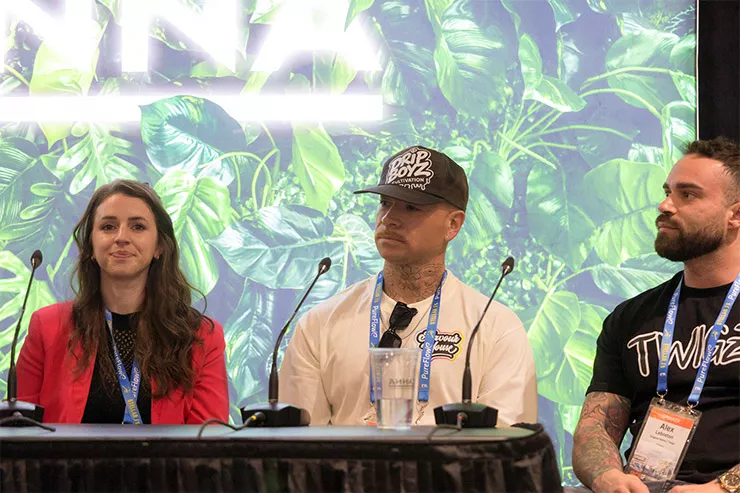
Fruity profiles have caught on, especially in Europe. Even in the Northeastern United States, “if you go up into Maine,” says Rutledge, “a sativa lemon profile will outsell almost everything else that you could put in the market that’s an indica gas base, 10 to one.”
Whereas on the West Coast, producers are moving candy or creamy gas lines that won’t budge in New England.
Flavour House started as a passion project that was commercialized in 2023 by co-founders and long-time friends, Josh Rutledge and Adam Brockest. They launched, through fulfillment partnerships, a genetics company with legacy roots from multi-award-winning lines. Their Strawberry Froyo became one of the highest in-demand SKUs in Germany, Australia, and other international markets.
Concerning the question of how often breeders find a genetic that checks every box, but doesn’t hit the potency number, Rutledge says:
“That’s the bane of my existence.”
“We go through thousands of seeds, and we’ve had it happen countless times. We’ll have 3,000 seeds, and we’ll have 5 to 10 keepers at the end of the year. So, it’s a very small percentage of what we’re going through.”

It’s a numbers game at this point in regulated cannabis, where legacy consumers might still be purchasing from the plug or cultivating for themselves. Therefore, staying current with the trends, often led by a younger, more flavour-forward generation zeroing in on price and labels, is keeping breeders and producers on their toes and deep in the realms of R&D.
Healthy Mothers, Healthy Crops
The masterclass “Mother, did it need to be so high?” moderated by Av Singh, brought together business owners, growers, and IPM specialists.
Genevieve Newton has grown indoors in living soil, outdoors in the field, and now she grows commercially using aeroponics for High Ground Medica. Regardless of location, the mom room needs to be the cleanest: “IPM is top priority,” says Newton, “as well as sanitation.”

Jordan Dickinson, co-founder of Lady Jane Labs, agreed that in aeroponics, root health, root care and pruning are paramount. When it comes to mediums for moms, “what’s simplest and most forgiving for large scale always is coco or peat mix.”
Mother plants, producing the next generation of healthy clones, are often reset every six to eight months; however, in aeroponics, “moms are only healthy in that system, three months at most,” says Newton. But cannabis producers know, a healthy bottom line is equally as important as growing healthy stock.
Supporting Farmers
The final thread was economics, because even the best product has to survive commodity compression.
Chairperson of the Federation of Cannabis Farmers, Andrew Nunez-Alvarez, called CANNA Canada’s sponsorship of the Masterclass sessions at Grow Up, a “safe environment for the industry to learn about practical, evidence-based insights the cannabis farming sector needs.”
Interestingly, Nunez-Alvarez is writing a thesis on the topic, stating that “commodity compression has made it essential for cultivators to understand where value is being created, delayed, or lost across the supply chain.”
Nunez-Alvarez presented a staggering stat from his University of Guelph graduate research during the “Efficiency and Margin” panel. “Based on Government of Canada data,” he says, “only 7.67% of unpackaged flower produced in 2025 transitioned into final packaging at federal licence holder facilities.”
Essential stats for an industry flogged by concerns, Nunez-Alvarez says, “sustainability in cannabis cultivation has to include financial sustainability.” And energy efficiency, product format decisions, and supply-chain visibility are all part of that equation.
After Glow
The evening of June 2, Nunez-Alvarez also helped coordinate a VIP industry event presented by CANNA, Biofloral, and Evolved Extraction Solutions, to deliver an invite-only gathering to which 500 guests registered.
“Community events like this clearly demonstrate what becomes possible when industry partners collaborate and invest in ethical, transparent, and community-development focused programming,” he says. Collaborations go hand in hand with recognition, and the entire community thrives on shared experiences and a common vision in mind.
Thank you to Grow Up for hosting industry-defining bi-annual gatherings and awards opportunities, including an annual spring Gala, and a newly inaugurated Cannabis Championship at the top of each year. Coupled with the Karma Cup that occurs every year in the late fall, trends suggest that many of the growers holding trophies are often seen sporting CANNA apparel – a representation of the nutrients and substrates they use in their operations.
Quality Speaks for Itself
In Canada, we’ve now surpassed the point of growing based on instinct alone. So much of the current cannabis market is predicated on staying current with consumer preferences in terms of flavour and product format.
Education remains at the forefront of the field, for growers and consumers alike, while pioneers make way for more nuanced ideas.
After interviewing countless cannabis players across the sector for over a decade, it’s safe to say that aside from science-backed intellectual property and the right talent in place for its execution, this industry, though sometimes in short supply, thrives on consistency, predictability, and partnerships you can trust.
Written by Haley Nagasaki